CRM
Customers, contacts, leads, tasks and status workflows in one structure.
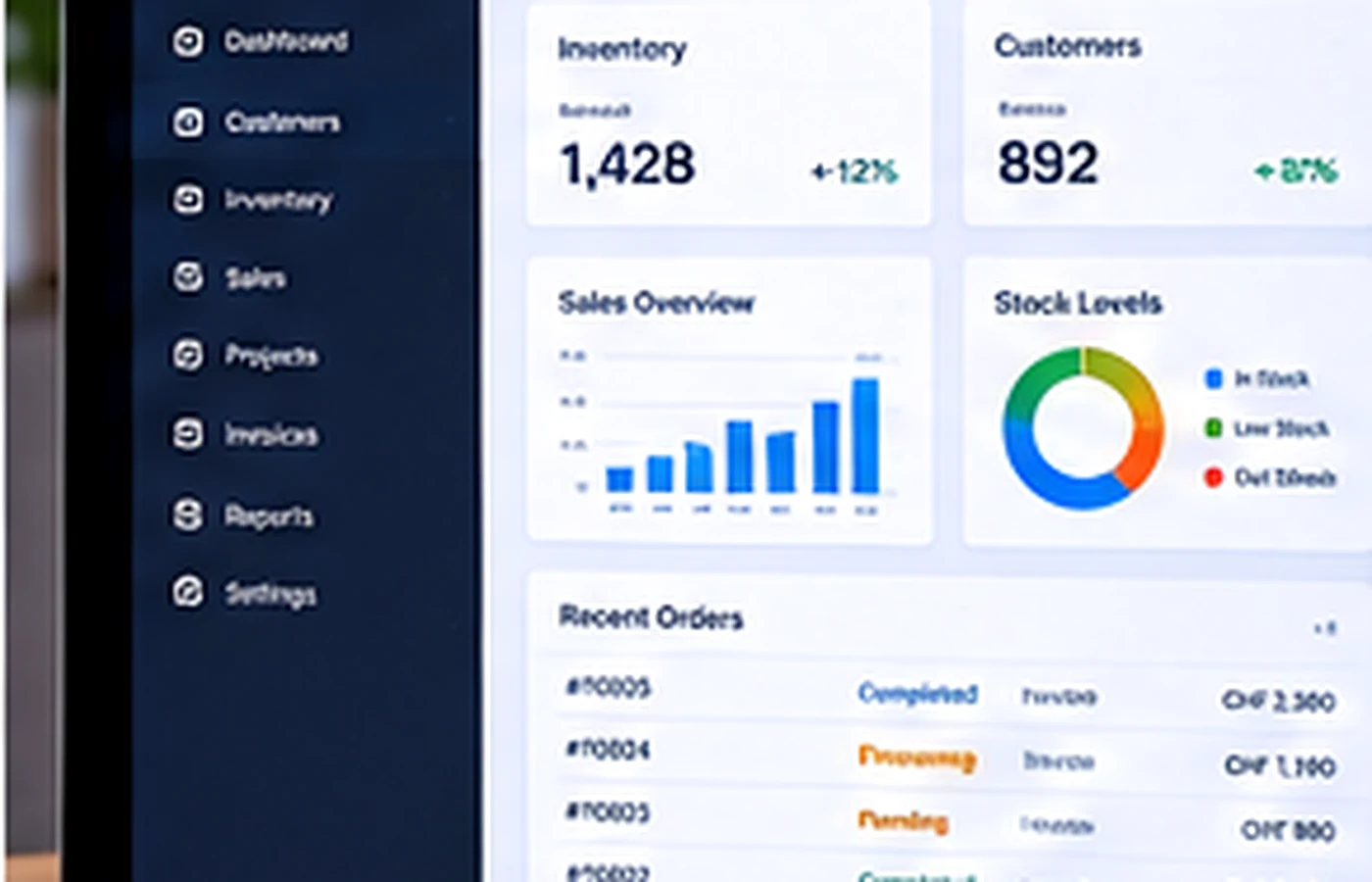
A business platform can combine customers, appointments, inventory, tasks, status workflows and reporting in one system. The structure is adapted to real operational processes.

The exact scope depends on the project. Typical elements can include:
Customers, contacts, leads, tasks and status workflows in one structure.
Availability, reservations, confirmations and administrative management.
Manage stock, items, movements and internal information centrally.
Present important metrics and operational information clearly.
Organise access and workflow steps according to user roles.
Connect existing systems through APIs and supported interfaces.
Existing websites, forms, external services and other systems can be connected through suitable interfaces so data does not need to be maintained repeatedly.
A business platform can combine customers, appointments, inventory, tasks, status workflows and reporting in one system. The structure is adapted to real operational processes.
Goals, users, existing systems and concrete requirements are clarified first.
Content, functionality, data, integrations and technical priorities are organised.
The solution is implemented in stages, reviewed and adjusted where required.
After launch, maintenance, extensions and further optimisation can continue.

Meetings, reviews, technical decisions and handover can be managed fully online. These digital services do not require on-site development.
Existing websites, forms, external services and other systems can be connected through suitable interfaces so data does not need to be maintained repeatedly.
A business platform can combine customers, appointments, inventory, tasks, status workflows and reporting in one system. The structure is adapted to real operational processes.
Request a project →