Web applications
Browser-based business applications, customer portals, internal platforms and purpose-built digital tools adapted to a specific workflow.
We design and build digital solutions around real business processes when standard tools no longer provide the required flexibility. From web applications and CRM systems to booking platforms, dashboards, APIs and automation.
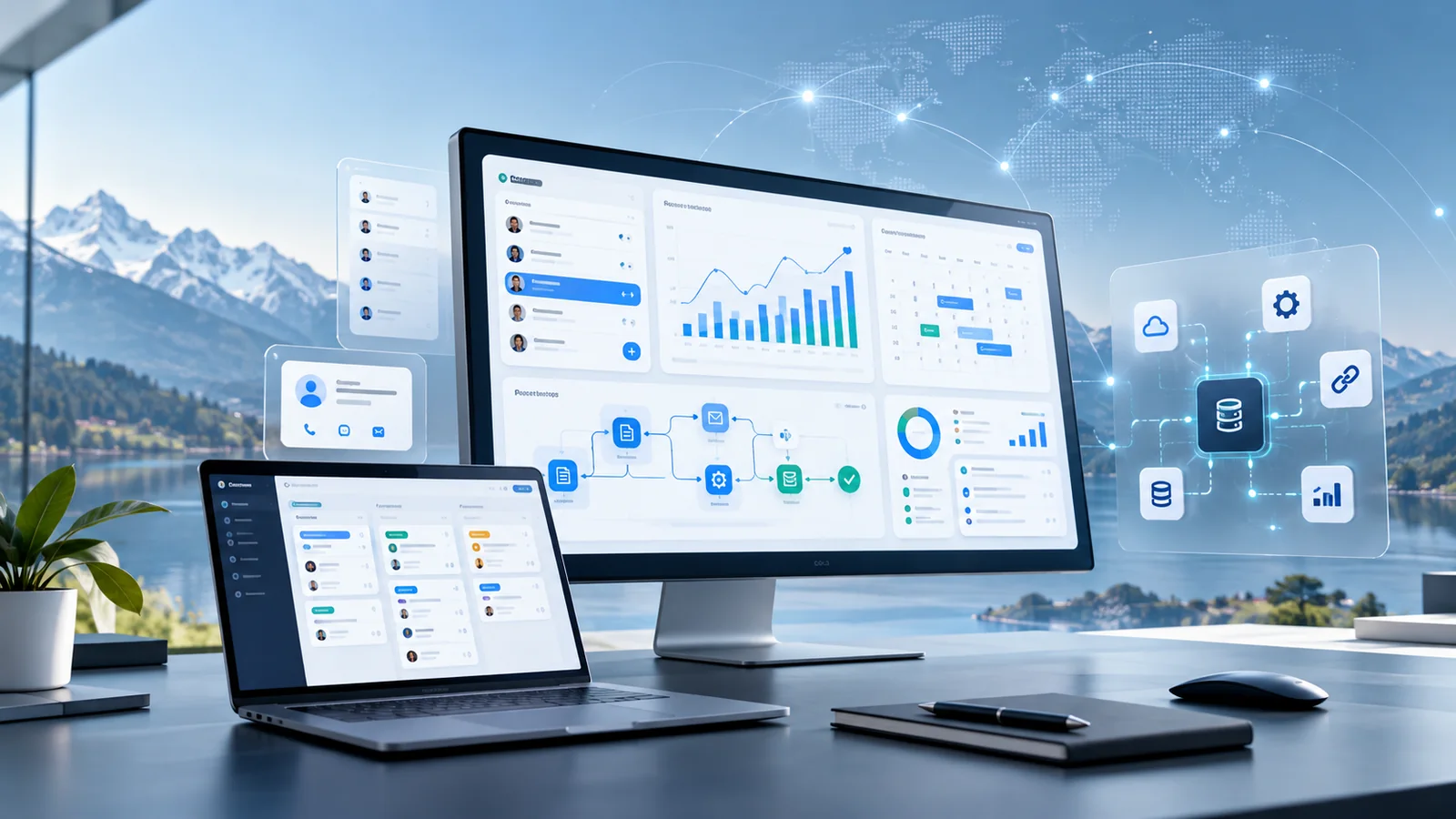
Standard software works well when the workflow is standard. Once teams begin maintaining parallel spreadsheets, copying information between systems or adapting their process to the limitations of a tool, custom software can provide a more controlled and efficient approach.
The starting point is the business process itself: who uses the system, which information moves through it, which steps can be automated, which roles need access and which existing systems need to exchange data. The objective is not to add features for their own sake, but to create a solution that solves a defined operational problem.
Browser-based business applications, customer portals, internal platforms and purpose-built digital tools adapted to a specific workflow.
Custom structures for leads, customers, tasks, statuses, follow-ups and internal processes when a standard CRM does not match the way the team works.
Digital booking flows, appointment management, availability, notifications and administrative views tailored to the service process.
Central views for operational data, reporting, approvals, task management and internal information that would otherwise be spread across multiple tools.
Connections between websites, business applications and external services so that data can move between systems without unnecessary manual entry.
Automation of repeatable administrative steps, notifications, data flows and internal workflows to reduce repetitive work and improve consistency.
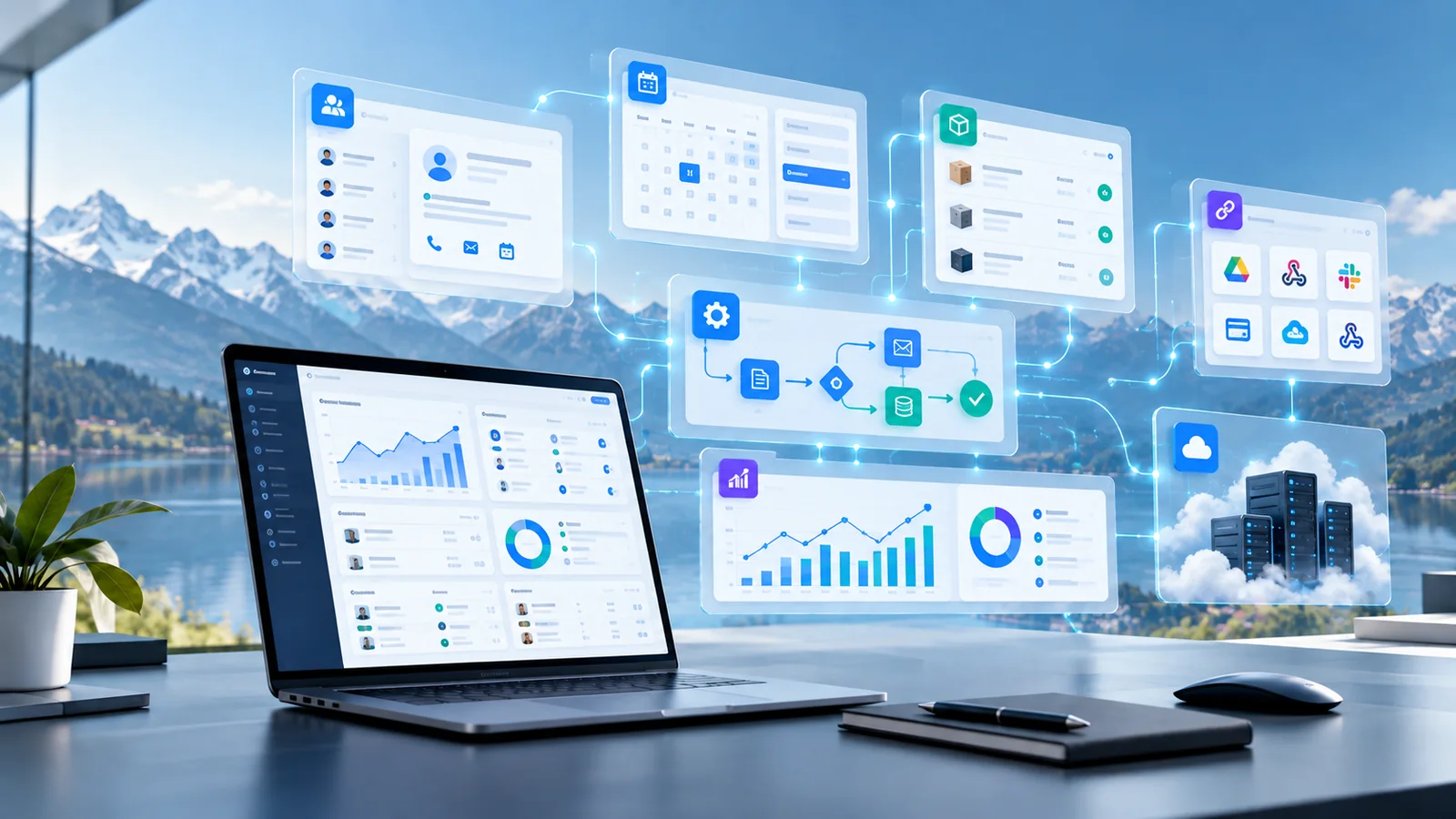
A custom solution is most useful when the business has a clear process that existing software cannot support efficiently. Typical situations include:
If an established product already solves the requirement well, building custom software is not automatically the better choice. The architecture should be selected according to the actual business requirement, long-term control and expected development path.
The technical structure depends on the project. A solution may include a responsive web interface, application logic, database layers, authentication, user permissions, administrative tools, APIs and connections to existing services. The important part is that the architecture follows the process rather than forcing the process into a predetermined template.
Integrations are planned with the same principle. Where reliable interfaces are available, existing tools can remain part of the workflow instead of being replaced unnecessarily. This can include data exchange, notifications, forms, external services, websites and other business systems.
Business requirements change. A useful software system therefore needs a structure that can be maintained, understood and extended. Clear responsibilities, controlled access, predictable data flows and documented decisions make future work significantly easier.
The project can start with the functions that provide the greatest operational value and expand in later stages. This avoids turning an initial release into an unnecessarily large system before the core workflow has been validated.
We clarify the users, current workflow, required functions, existing systems and the business problem the software should solve.
The project is divided into clear functions and priorities so that the important parts are addressed first and the scope remains understandable.
The solution is developed in controlled stages. Functions can be reviewed, tested and adjusted as the project progresses.
After validation, the solution is prepared for production use, with technical handover and further support according to the project requirements.
Software projects for companies in Switzerland can be handled fully remotely. Meetings, requirements, project decisions, development, reviews, testing and technical handover are managed digitally, without requiring on-site development work.

Requirements, priorities and next steps are documented clearly. This keeps the project understandable and allows decisions to be made efficiently even when all collaboration takes place online.
Depending on the requirement, this can include web applications, CRM solutions, booking systems, dashboards, internal tools, API integrations and workflow automation.
Communication, requirements analysis, project coordination, development, testing and technical handover take place online. The scope, priorities and next steps are documented throughout the project.
Where suitable APIs or other supported interfaces are available, a new application can be designed to exchange data with existing websites, platforms and business systems.
The timeframe depends on the scope, number of functions, integrations and testing requirements. A defined scope is reviewed before a realistic project schedule is established.
Pricing depends on the required functionality, technical complexity, integrations and project scope. The requirements are clarified before a project proposal is prepared.
If your company needs a web application, CRM, booking system, integration or another custom digital solution, we can first clarify the requirements and determine an appropriate project structure.